

ACTinBlack DTNVS-MG and DTNVX Compared

DTVNX
ACTinBlack DTNVS-MG and DTNVX Compared
ACTinBlack expands its product portfolio with the new DTNVX. This article compares the DTNVS-MG and DTNVX side by side, breaking down what they have in common and where the DTNVX takes things further.
At a glance: The DTNVS-MG is the lighter, streamlined option, while the DTNVX adds external power, a built-in IPD system, field-configurable settings, and additional optics options. The DTNVS-MG is the choice when minimum weight and simplicity are the priority; the DTNVX is optimal when extended runtime and greater configuration flexibility are operational requirements.
DTNVS-MG and DTNVX: Built on the Same Proven Platform
The DTNVS-MG and DTNVX are built on the same proven V2 architecture. They share 18mm image intensifier tubes, manual gain as standard, and full PVS-14 optics compatibility. Both are certified to MIL-STD-810G and rated waterproof to 20 meters for 2 hours. For operators who need a capable, proven binocular, either system delivers. The DTNVX builds on that foundation with additional capabilities designed for operators who require more configuration, more power flexibility, and more system management.
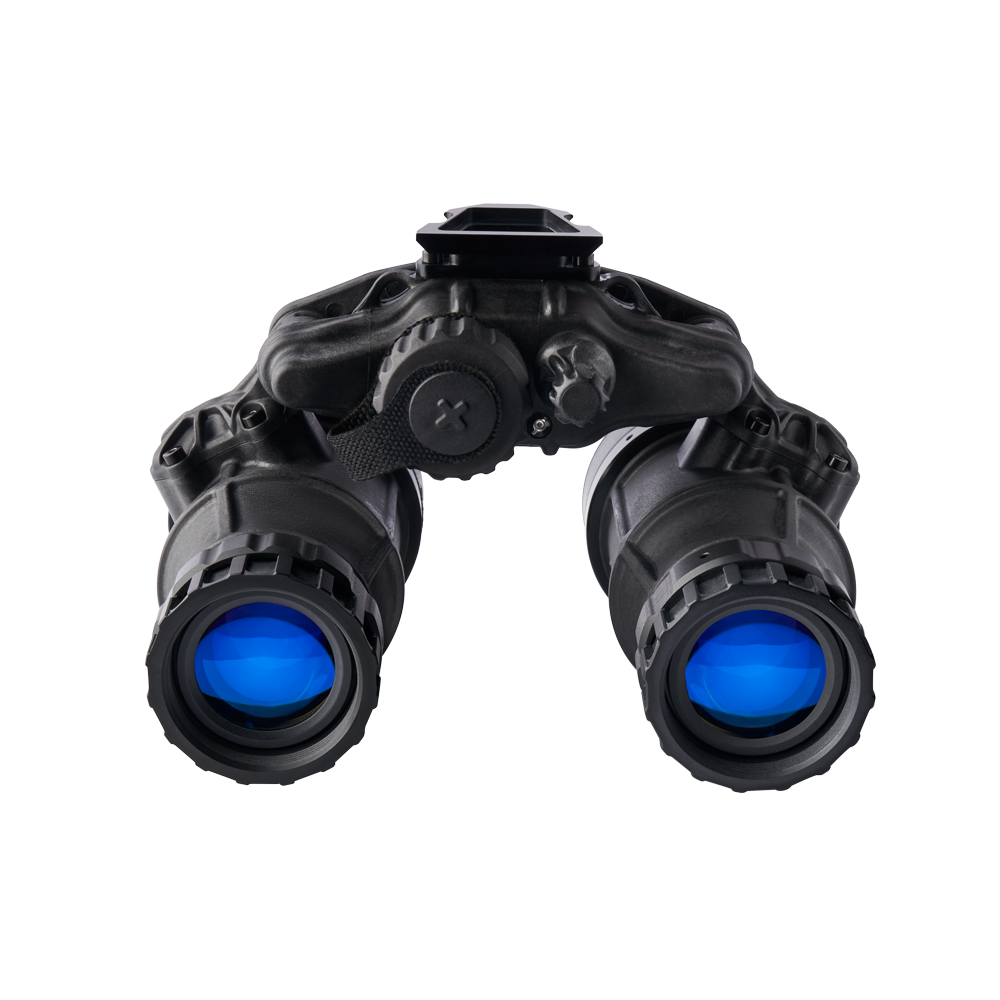
DTNVS-V2
DTNVS-MG vs. DTNVX Full Specs Comparison
| Specification | DTNVS-MG | DTNVX |
|---|---|---|
| Lens System | F/1.2 | F/1.2 (F/0.95 option) |
| IIT Format | 18 mm | 18 mm |
| Field of View | 40° | 40° (50° option) |
| Manual Gain | Yes | Yes |
| Weight | Min. 445 g / 15.6 oz | Min. 465 g / 16.4 oz |
| Battery | 1× CR123A | 1× CR123A or 1× AA |
| Battery Life (int.) | 25 hrs (up to 35 hrs) | Min. 22 hrs |
| Battery Life (ext.) | — | Min. 40 hrs |
| External Power | — | Yes |
| IPD System | Optional | Built-in |
| User Programmability | — | Yes (field-configurable) |
| High Light Cut-Off | — | Yes (after 70 sec) |
| No Motion Shut-Off | — | Yes (after 120 sec) |
| IR Illuminator | Yes | Yes, at 890 nm |
| Waterproof | 20 m / 2 hrs | 20 m / 2 hrs |
| PVS-14 Optics | Yes | Yes |
| Standards | MIL-STD-810G | MIL-STD-810G |
| Maintenance Interface | — | Dongle via external power port |
| Dimensions | 76 × 105 × 111 mm | 83H × 99W × 98L mm |
Key Differences Between the DTNVS-MG and DTNVX
External Power and Extended Runtime
The DTNVX supports external power via a dedicated port, extending runtime to over 40 hours with the optional battery pack. It also accepts 1× AA batteries in addition to the standard CR123A, providing more flexibility in the field. The DTNVS-MG runs on a single CR123A with up to 35 hours of runtime thanks to automatic pod shutoff.
Built-In IPD System
The DTNVX includes a built-in IPD locking system as standard. On the DTNVS-MG, IPD locking is available as an optional accessory. For operators who frequently transition between stowed and active positions, the integrated IPD system reduces setup time in the field.
Advanced Field Configuration
The DTNVX enables operators to configure system behavior directly in the field without external tools. Programmable functions include automatic power management and activation sequences. Additional features like No Motion Shut-Off after 120 seconds and High Light Cut-Off after 70 seconds extend battery life and protect image intensifier tubes automatically.
Optics Flexibility
Both support F/1.2 optics and a 40° FOV as standard, with full PVS-14 optics compatibility. The DTNVX adds an F/0.95 lens option for improved low-light performance and an optional 50° FOV for enhanced situational awareness.
System Maintenance and Firmware
With its dongle attached to the external power port, the DTNVX provides easy access to system runtime readouts, advanced settings, and firmware updates. The PVS-14-derived internal architecture makes technical intervention and training faster, supporting long-term system viability and parts availability.
Which one to choose?
The DTNVS-MG is best suited for:
- Operators who need a complete, proven system with manual gain at minimum weight
- Standard CR123A logistics with up to 35 hours of runtime
- Missions with a consistent power supply and no requirement for an external battery
- Users who prioritize simplicity and ease of use
The DTNVX is best suited for:
- Missions requiring extended runtime via external power
- Operators who need built-in IPD and field-configurable system behavior
- Enhanced optical options: F/0.95 lens or 50° FOV
- System read-out, advanced settings, and firmware updates via the DONGLE maintenance interface.
The Bottom Line
Both the DTNVS-MG and the DTNVX share the same 18mm IIT foundation and core feature set. The DTNVS-MG is a complete, mission-ready binocular for operators who need proven performance at minimum weight. The DTNVX is the right choice when extended runtime, built-in IPD, and field configurability are operational requirements.
Proven foundations. Modern capability.
Find out more:
DTNVS-MG — Lightest Binocular on the Market
DTNVX – The New Benchmark
Questions about which system fits your mission?
Contact the ACTinBlack team
Frequently Asked Questions: DTNVS-MG vs. DTNVX
What is the difference between the DTNVS-MG and the DTNVX?
Both share the same platform, manual gain, and core specifications. The DTNVX adds external power support for more than 40 hours of runtime, a built-in IPD system, field programmability, and additional optics options.
Does the DTNVX replace the DTNVS-MG?
No. Both remain in active production and serve different operational needs. The DTNVX expands the ACTinBlack ecosystem rather than replacing the DTNVS-MG.
Which system is lighter, the DTNVS-MG or the DTNVX?
The DTNVS-MG at 445g is lighter than the DTNVX at 465g. For operators where weight is the primary factor, the DTNVS-MG has the advantage.
Do both have manual gain?
Yes. Both the DTNVS-MG and DTNVX include manual gain as standard.
How long does the battery last on the DTNVS-MG and DTNVX?
The DTNVS-MG provides up to 35 hours per CR123A battery thanks to automatic pod shutoff. The DTNVX delivers a minimum of 22 hours internally and over 40 hours with the external battery pack.
Are the DTNVS-MG and the DTNVX waterproof?
Yes. Both are rated waterproof to 20 meters for 2 hours and certified to MIL-STD-810G.